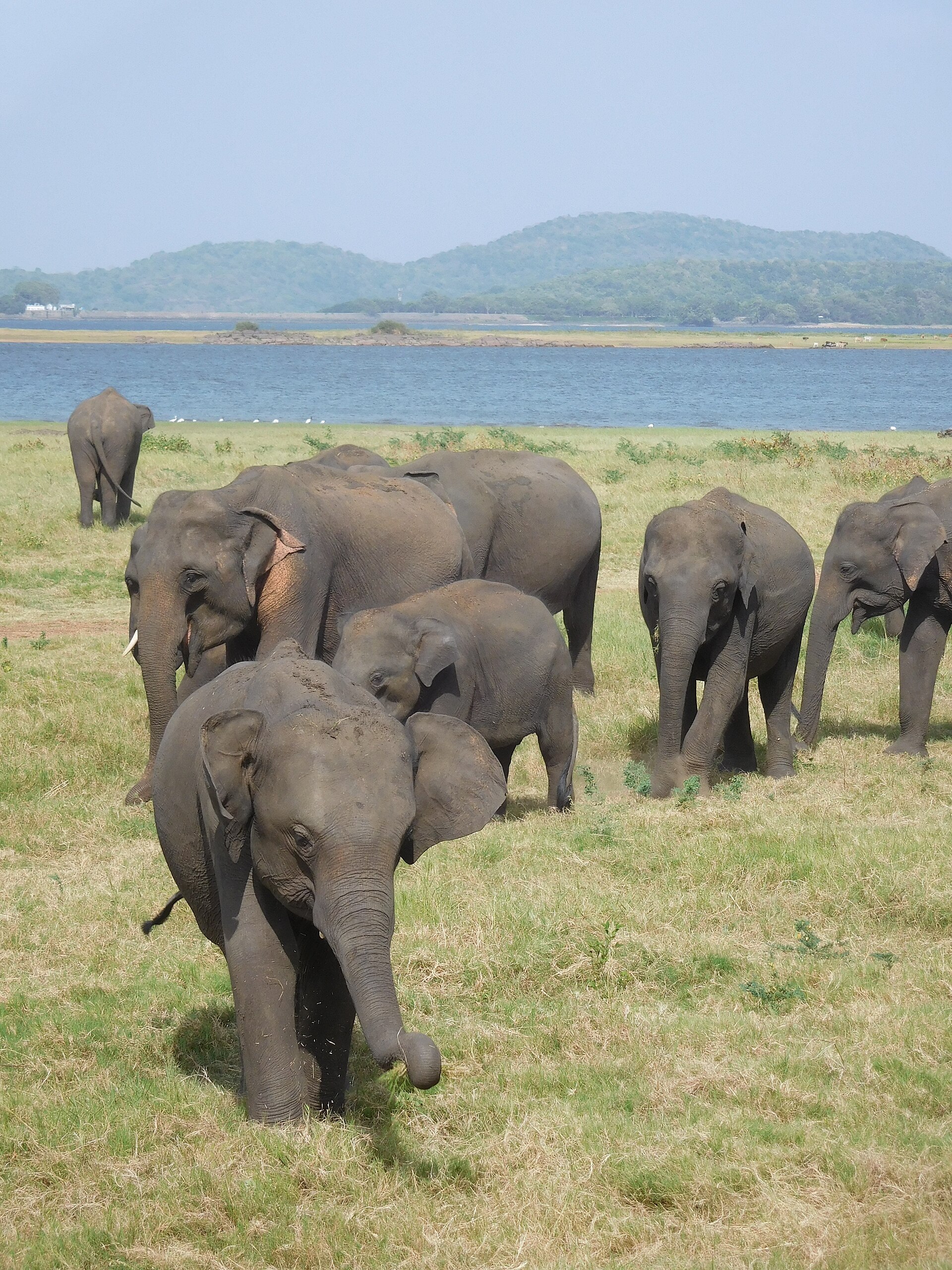
There is a sound the tank country makes in the dry season, and it is not a sound at all — it is a hush. The rains stop, the forest pools shrink to memory, and the ancient reservoir at Minneriya begins its slow retreat, uncovering meadow after meadow of sweet new grass. Then, out of the treeline, the elephants come. First in families, then in clans, then in numbers that make first-time guests put the camera down entirely and simply stand there.
This is The Gathering — the largest seasonal assembly of wild Asian elephants anywhere on earth, and it happens ten minutes from our verandah. If you are planning a Cultural Triangle itinerary around it (and you should), this entry is the field guide we wish every guest had read before arriving.
What, exactly, is The Gathering?
The Minneriya tank is not a natural lake. It is a working reservoir raised by royal engineers some seventeen centuries ago, and it still does what it was built to do: hold the monsoon. As the dry months burn on, the water pulls back from its shores and leaves behind exactly the two things a wild elephant wants most — open water and tender grass — at precisely the moment the forest can offer neither.
So the herds converge. Elephants that spend the wet season scattered through the jungles of the North Central Province walk their old roads to the tank — the same roads their grandmothers walked — and for a few improbable months the shoreline becomes a slow, grey city. On the best evenings of the season, trackers count herds in the hundreds on the grass at one time. They bathe, spar, court, nurse their calves and strip the meadows with a sound like slow rain.

Reading the season, month by month
The Gathering is a tide, not a timetable. It builds, peaks and disperses with the water, which means the honest answer to “when should we come?” is always “it depends on the rains.” That said, the season keeps a broad rhythm year after year:
- June — the overture. The first families test the shoreline. Sightings are smaller but intimate, and the park is at its quietest.
- July to August — the build. The water falls, the grass widens, the clans arrive in earnest. This is the season most guests plan around.
- September — the height. The largest congregations of the year, most often in the late afternoon. Book well ahead; the whole travelling world has heard about September.
- October — the long exhale. The herds begin drifting toward Kaudulla as the first storms build. Some of our favourite drives of the year happen in this in-between light.
- The wet months — the dispersal. The rains return, the tank refills, and the elephants melt back into the forest. The Gathering does not happen so much as it un-happens.
One of the quiet advantages of staying at the edge of the parks is that the herds move between Minneriya and Kaudulla with the water — and we simply follow. On any given morning our trackers know which gate is the right gate, which saves guests from the most common Gathering mistake: driving into the wrong park on the wrong week.
You do not find the elephants. You find the water, and you let the elephants find you.
A Minneriya tracker — words kept, name to follow
How we do it from the lodge
Being ten minutes from the park gate changes the shape of the day. There is no dawn scramble down the Habarana road; you finish breakfast, the jeep arrives under the trees, and you are on the grass while the tour buses are still counting heads in a car park. We time drives for the elephants’ hours, not the itinerary’s — which in the dry season means the long golden stretch of late afternoon, when the herds walk down to the water and the light turns the whole shoreline to bronze.
We also keep to the respectful side of wonder. Our drivers hold their distance, switch engines off at sightings, and never box a herd against the water — the elephants were here first, and they will be here after us, and the entire point of coming this far is to watch them behave as if we weren’t there.
Field notes for your first drive
- Bring a dust scarf and soft-sided binoculars; the shoreline road is dry-season country in every sense.
- Wear the landscape’s colours — olive, sand, clay. The elephants do not care, but your photographs will.
- Put the camera down for one full sighting. The sound of three hundred elephants tearing grass is the thing you will actually remember.
- Stay at least two nights in the season. The Gathering is weather, not theatre — give it two performances.
- Ask the trackers questions. Every one of them has a story about a particular matriarch, and the stories are better than anything we could publish here.
The dry season is already writing next year’s entry on the shoreline. If you would like to be standing on the verandah when the herds come down to drink, tell us your dates — the people who wrote this are the same people who will answer.